Listen and choose the same sentence.
Audio coming soon
The audio is coming soon, so you can skip this question.
Correct!
Not quite
Answerあたまが いたいです。
「あたま」 is head. 「あたまが いたいです」 means your head hurts.
 Day One Japanese
Step 1 of 7
Your progress can't be saved on this device. You can keep learning while this page is open.
Lesson 4
からだの ちょうし
When you feel unwell: telling your workplace.
Lesson 4 Saying how you feel
First, listen to the conversation. Listen as many times as you like.
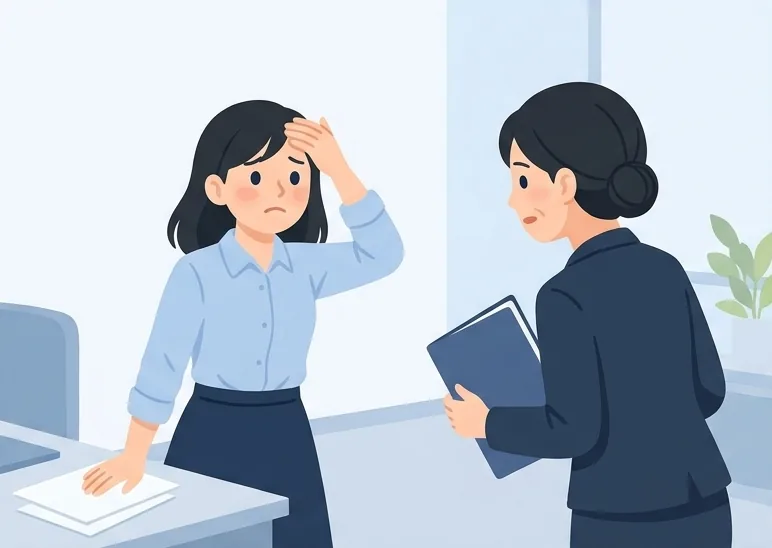
Morning, at work. Sato speaks to Linh, who doesn't look well.
 Sato
Sato
リンさん、だいじょうぶですか。
Linh, are you okay?
 Linh
Linh
すみません。ちょっと ちょうしが わるいです。
I'm sorry. I don't feel very well.
Sato
どこが わるいですか。
What's wrong?
Linh
あたまが いたいです。
I have a headache.
Sato
たなかさんに はなして ください。
Please tell Tanaka.
Linh
はい、ありがとうございます。
Okay, thank you.
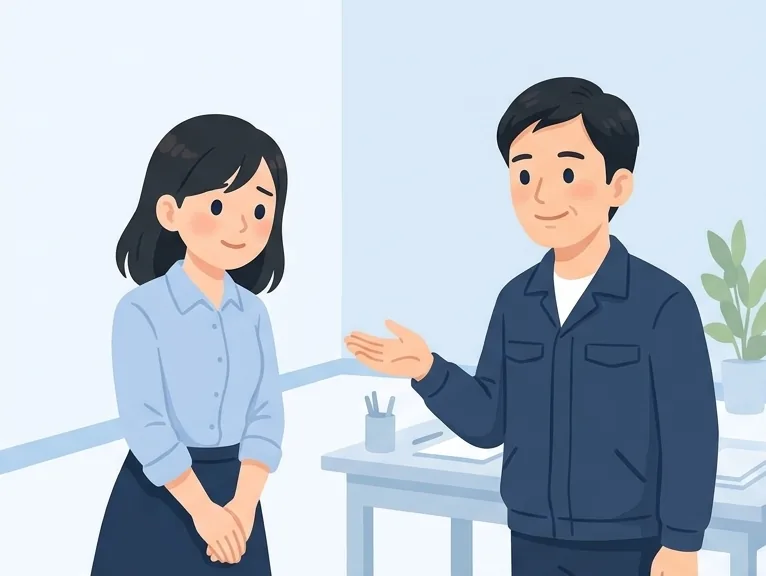
A little later, at work. Linh tells Tanaka how she feels.
Linh
たなかさん、すみません。ねつが あります。
Excuse me, Tanaka. I have a fever.
 Tanaka
だいじょうぶですか。
Are you okay?
Linh
あたまも いたいです。きょうは やすみたいです。
My head hurts too. I'd like to take today off.
Tanaka
わかりました。びょういんに いきますか。
I see. Will you go to the hospital?
Linh
はい、びょういんに いきたいです。
Yes, I'd like to go to the hospital.
Tanaka
わかりました。おだいじに。
All right. Take care.
Linh
ありがとうございます。
Thank you.
Lesson 4 Saying how you feel
Check what each line of the conversation means.
Morning, at work. Sato speaks to Linh, who doesn't look well.
Sato
リンさん、だいじょうぶですか。
Linh, are you okay?
Linh
すみません。ちょっと ちょうしが わるいです。
I'm sorry. I don't feel very well.
Sato
どこが わるいですか。
What's wrong?
Linh
あたまが いたいです。
I have a headache.
Sato
たなかさんに はなして ください。
Please tell Tanaka.
Linh
はい、ありがとうございます。
Okay, thank you.
A little later, at work. Linh tells Tanaka how she feels.
Linh
たなかさん、すみません。ねつが あります。
Excuse me, Tanaka. I have a fever.
Tanaka
だいじょうぶですか。
Are you okay?
Linh
あたまも いたいです。きょうは やすみたいです。
My head hurts too. I'd like to take today off.
Tanaka
わかりました。びょういんに いきますか。
I see. Will you go to the hospital?
Linh
はい、びょういんに いきたいです。
Yes, I'd like to go to the hospital.
Tanaka
わかりました。おだいじに。
All right. Take care.
Linh
ありがとうございます。
Thank you.
Lesson 4 Saying how you feel
These are the key phrases from the conversation. Say them out loud and copy them.
Audio coming soon
ちょうしが わるいです。
I don't feel well.
Say that you don't feel well. Saying 「すみません」 first makes it easier for people to listen.
[あたま]が いたいです。
My [head] hurts.
Say where it hurts. [ ] is a part of the body.
ねつが あります。
I have a fever.
Say that you have a fever.
きょうは やすみたいです。
I'd like to take today off.
Say that you want to take the day off. Never just stay away; always tell them before work starts.
びょういんに いきたいです。
I'd like to go to the hospital.
Say that you want to go to the hospital.
「〜が いたいです」 says where it hurts (あたまが いたいです). 「〜も」 means “also” (あたまも いたいです). 「〜たいです」 says what you want to do: 「やすみます」 becomes 「やすみたいです」, and 「いきます」 becomes 「いきたいです」. When you don't feel well, don't just put up with it. Say 「すみません」 first, then tell someone.
からだ
body
あたま
head
おなか
stomach
のど
throat
ねつ
fever
いたい
hurts / painful
わるい
bad
ちょうし
condition
かぜ
cold (illness)
くすり
medicine
びょういん
hospital
やすみます
take a day off / rest
やすみ
day off
いきます
go
あります
have / there is
どこ
where
すこし
a little
はなします
talk / tell
でんわ
phone / phone call
おだいじに
take care (of yourself)
Lesson 4 Saying how you feel
Practice 1 of 10
Let's try the ones you missed once more.
Listen and choose the same sentence.
Audio coming soon
The audio is coming soon, so you can skip this question.
Correct!
Not quite
Answerあたまが いたいです。
「あたま」 is head. 「あたまが いたいです」 means your head hurts.
Listen and choose the same sentence.
Audio coming soon
The audio is coming soon, so you can skip this question.
Correct!
Not quite
Answerおなか
「おなか」 is the stomach.
Choose the word for ( ).
おなか( )いたいです。
Correct!
Not quite
Answerが
Use 「が」 for the place that hurts: 「おなかが いたいです」.
Choose one
Choose the word for ( ).
きょうは やすみ( )です。
Correct!
Not quite
Answerたい
Say what you want to do with 「〜たいです」. 「やすみます」 becomes 「やすみたいです」.
Choose one
You have a headache. Tanaka asks you this. What do you say?
Tanaka
だいじょうぶですか。
Correct!
Not quite
Answerすみません、あたまが いたいです。
When you don't feel well, don't just say 「だいじょうぶです」. Say what is wrong.
Choose one
What do you say back?
Sato
どこが わるいですか。
Correct!
Not quite
Answerのどが いたいです。
「どこが わるいですか」 asks what part of your body is not well. Answer with 「〜が いたいです」.
Choose one
What do you say back?
Tanaka
わかりました。おだいじに。
Correct!
Not quite
Answerありがとうございます。
「おだいじに」 means “take care of yourself.” When someone says it, answer 「ありがとうございます」.
Choose one
Tap in order to make a self-introduction.
Sentences line up in the order you tap. Tap a placed sentence to take it back.
Correct!
Not quite
Answerきょうは びょういんに いきたいです。
Both 「きょうは びょういんに いきたいです」 and 「びょういんに きょうは いきたいです」 work. 「いきたいです」 comes last.
This is the medicine bag you got at the hospital. When do you take it?
Correct!
Not quite
Answerあさ と よる
「あさ と よる」 means twice: in the morning and at night (「あさ」 and 「よる」 from Lesson 2).
Choose one
This is the hospital's information. Until what time is it open?
Correct!
Not quite
Answer5じ
「9じ 〜 5じ」 means from 9 to 5. It closes at 5.
Choose one
Practice complete. Great work!
Lesson 4 Saying how you feel
In this situation, try saying it out loud.
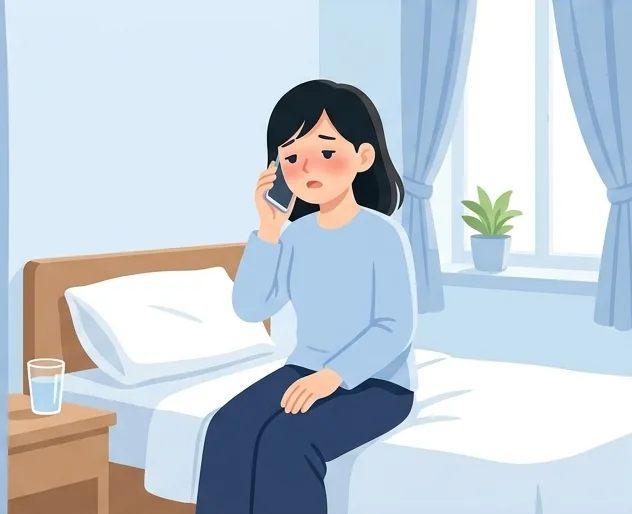
In the morning, you wake up in the dormitory with a fever. Before work starts, call Tanaka and tell him you want to take the day off. Say it out loud.
Greet and say your name first, then say 「ねつが あります」 and 「きょうは やすみたいです」. At Japanese workplaces, always call before work starts when you take a day off.
Example
おはようございます。リンです。すみません、ねつが あります。きょうは やすみたいです。
You can say that you don't feel well and where it hurts, like 「ちょうしが わるいです」, 「あたまが いたいです」, and 「ねつが あります」.
You can say 「きょうは やすみたいです」 and 「びょういんに いきたいです」, and thank someone who says 「おだいじに」.

You can say that you don't feel well and where it hurts, like 「ちょうしが わるいです」, 「あたまが いたいです」, and 「ねつが あります」.
I can do it
Try again
You can say 「きょうは やすみたいです」 and 「びょういんに いきたいです」, and thank someone who says 「おだいじに」.
I can do it
Try again