Listen and choose the same sentence.
Correct!
Not quite
Answerさかなが すきです。
「さかな」 is fish. 「さかなが すきです」 means you like fish.
 Day One Japanese
Step 1 of 7
Your progress can't be saved on this device. You can keep learning while this page is open.
Lesson 5
すきな たべもの
At breaks and meals: saying what you like and what you can't eat.
Lesson 5 Food you like
First, listen to the conversation. Listen as many times as you like.
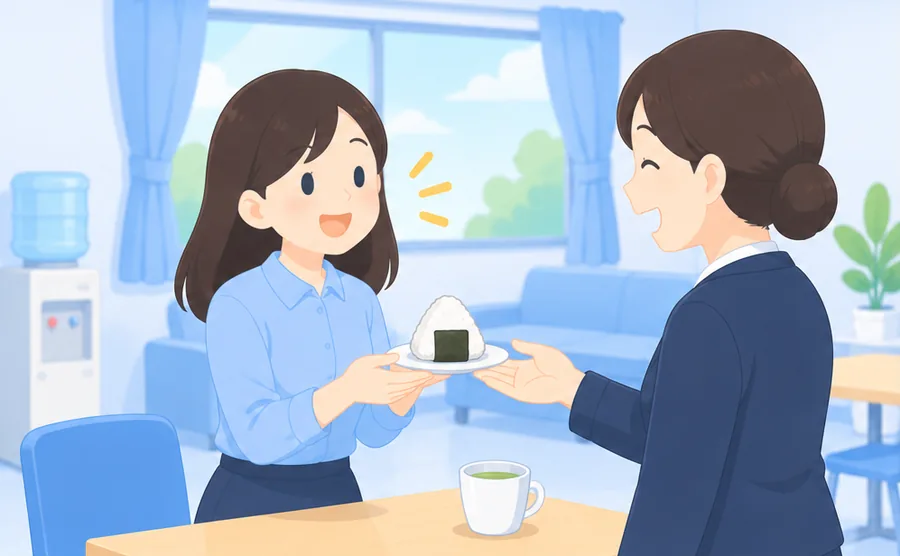
Lunch break, in the break room at work. Sato shares a rice ball with Linh.
 Sato
リンさん、おにぎり、どうぞ。
Linh, have a rice ball.
 Linh
わあ、ありがとうございます。いただきます。
Oh, thank you. Itadakimasu.
Sato
どうですか。
How is it?
Linh
おいしいです。
It's delicious.
Sato
よかった。リンさんは、たべものは なにが すきですか。
I'm glad. What food do you like, Linh?
Linh
さかなが すきです。さとうさんは?
I like fish. How about you, Sato?
Sato
わたしは くだものが すきです。
I like fruit.

Evening, at work. Tomorrow night, everyone from work will have dinner together. Tanaka asks Linh about food.
 Tanaka
リンさん、あしたの よる、みんなで ごはんを たべます。
Linh, tomorrow night we're all having dinner together.
Linh
はい、ありがとうございます。
Okay, thank you.
Tanaka
たべられない ものは ありますか。
Is there anything you can't eat?
Linh
はい。たまごは たべられません。アレルギーが あります。
Yes. I can't eat eggs. I have an allergy.
Tanaka
わかりました。からい ものは だいじょうぶですか。
I see. Is spicy food okay?
Linh
からい ものは ちょっと…。
Spicy food is a bit…
Tanaka
わかりました。
Got it.
Linh
よろしく おねがいします。
Thank you for taking care of it.
Lesson 5 Food you like
Check what each line of the conversation means.
Lunch break, in the break room at work. Sato shares a rice ball with Linh.
Sato
リンさん、おにぎり、どうぞ。
Linh, have a rice ball.
Linh
わあ、ありがとうございます。いただきます。
Oh, thank you. Itadakimasu.
Sato
どうですか。
How is it?
Linh
おいしいです。
It's delicious.
Sato
よかった。リンさんは、たべものは なにが すきですか。
I'm glad. What food do you like, Linh?
Linh
さかなが すきです。さとうさんは?
I like fish. How about you, Sato?
Sato
わたしは くだものが すきです。
I like fruit.
Evening, at work. Tomorrow night, everyone from work will have dinner together. Tanaka asks Linh about food.
Tanaka
リンさん、あしたの よる、みんなで ごはんを たべます。
Linh, tomorrow night we're all having dinner together.
Linh
はい、ありがとうございます。
Okay, thank you.
Tanaka
たべられない ものは ありますか。
Is there anything you can't eat?
Linh
はい。たまごは たべられません。アレルギーが あります。
Yes. I can't eat eggs. I have an allergy.
Tanaka
わかりました。からい ものは だいじょうぶですか。
I see. Is spicy food okay?
Linh
からい ものは ちょっと…。
Spicy food is a bit…
Tanaka
わかりました。
Got it.
Linh
よろしく おねがいします。
Thank you for taking care of it.
Lesson 5 Food you like
These are the key phrases from the conversation. Say them out loud and copy them.
Some lines don't have audio yet (coming soon)
いただきます。
Thank you for the food (said before eating).
Say this before eating, to thank the food and the person who prepared it or gave it to you. It is a set greeting before meals, not a request for permission. When you finish, say 「ごちそうさまでした」.
おいしいです。
It's delicious.
When you think something tastes good, say it out loud. The person who made or gave it will be happy.
[さかな]が すきです。
I like [fish].
Say what you like. [ ] is a food or something else.
[たまご]は たべられません。
I can't eat [eggs].
Say what you can't eat. 「たべられません」 means “can't eat”. For now, remember 「〜は たべられません」 as one phrase. If you have an allergy or can't eat something, don't keep quiet; say it clearly.
[からい もの]は ちょっと…。
[Spicy food] is a bit…
Softly say no to something you don't like. In Japan, instead of saying “I don't like it” directly, people stop at 「ちょっと…」 without finishing the sentence. This is a polite way to say no. But for allergies or anything that makes you sick, don't just say 「ちょっと…」; say clearly 「〜は たべられません」.
「〜が すきです」 says what you like (さかなが すきです). In 「〜が すきです」, put 「が」 after the name of the food or thing you like. For example: 「にくが すきです」. To ask what someone likes, say 「なにが すきですか」 (use 「なに」 before 「が」 or 「を」, and 「なん」 before 「です」: これは なんですか). Like 「さとうさんは?」, just 「〜は?」 asks the other person the same question. 「〜は たべられません」 says what you can't eat. 「〜は ちょっと…」 is a soft way to say no without saying “I don't like it” directly. Say 「いただきます」 before eating and 「ごちそうさまでした」 after. When someone gives you food, thank them and say 「おいしいです」.
たべもの
food
ごはん
rice / meal
ひるごはん
lunch
おにぎり
rice ball
さかな
fish
にく
meat
やさい
vegetables
くだもの
fruit
たまご
egg
もの
thing
すき
like
からい
spicy
あまい
sweet
おいしい
delicious
たべます
eat
のみます
drink
なに
what
アレルギー
allergy
いただきます
said before eating
ごちそうさまでした
said after eating
Lesson 5 Food you like
Practice 1 of 10
You've answered every question. Now let's try the ones you missed once more.
Listen and choose the same sentence.
Correct!
Not quite
Answerさかなが すきです。
「さかな」 is fish. 「さかなが すきです」 means you like fish.
Listen and choose the same sentence.
Audio coming soon
The audio is coming soon, so you can skip this question.
Correct!
Not quite
Answerたまご
「たまご」 is egg.
Choose the word for ( ).
わたしは にく( )すきです。
Correct!
Not quite
Answerが
Use 「が」 for the thing you like: 「にくが すきです」.
You want to ask what food someone likes. Which word goes in ( )?
( )が すきですか。
Correct!
Not quite
Answerなに
Use 「なに」 (what) to ask about things. It is 「なに」 before 「が」 (in Lesson 3, 「これは なんですか」 uses 「なん」 because it comes before 「です」).
You are allergic to eggs. Tanaka asks you this. What do you say?
Tanaka
たべられない ものは ありますか。
Correct!
Not quite
Answerはい。たまごは たべられません。
Don't keep quiet about food you can't eat. Say 「〜は たべられません」. This is especially important for allergies.
Sato gives you a rice ball. What do you say?
Sato
これ、どうぞ。
Correct!
Not quite
Answerありがとうございます。いただきます。
When you receive something, say 「ありがとうございます」, and before eating, 「いただきます」. 「ごちそうさまでした」 is for when you finish eating.
What do you say back?
Sato
おいしいですか。
Correct!
Not quite
Answerはい、おいしいです。
If you think it's good, you can answer 「はい、おいしいです」 to tell how you feel.
You don't like spicy food. Say no softly.
Tanaka
からい もの、たべますか。
Correct!
Not quite
Answerすみません、からい ものは ちょっと…。
Say 「すみません」 first, then 「〜は ちょっと…」, to say no softly.
Tap the parts in the correct order to make a sentence.
Parts line up in the order you tap. Tap a placed part to take it back.
Correct!
Not quite
Answerわたしは くだものが すきです。
It's 「わたしは くだものが すきです」. 「すきです」 comes last.
You can't eat eggs. Look at today's lunch menu and choose the dish you need to avoid.
Correct!
Not quite
AnswerC やさい と たまご
C has 「たまご」 (egg), so you can't eat it. If you're not sure whether a dish has egg, ask before eating.
All correct!
Practice complete. Great work!
Lesson 5 Food you like
In this situation, try saying it out loud.

Tomorrow, everyone from work will have dinner together. Tell Tanaka what you like and what you can't eat. Say it out loud.
First say what you like with 「〜が すきです」, then say 「すみません」 and tell them what you can't eat. Don't hold back about food you can't eat.
Example
わたしは さかなが すきです。すみません、たまごは たべられません。
When someone gives you food, you can say 「ありがとうございます」 and 「いただきます」, and tell them 「おいしいです」 after you taste it. You can say what food you like, like 「さかなが すきです」.
When asked 「たべられない ものは ありますか」, you can politely say what you can't eat or don't like, like 「たまごは たべられません」 and 「からい ものは ちょっと…」.

You finished Lesson 5
Day streak
When someone gives you food, you can say 「ありがとうございます」 and 「いただきます」, and tell them 「おいしいです」 after you taste it. You can say what food you like, like 「さかなが すきです」.
I can do it
Not yet
When asked 「たべられない ものは ありますか」, you can politely say what you can't eat or don't like, like 「たまごは たべられません」 and 「からい ものは ちょっと…」.
I can do it
Not yet