Listen and choose the same sentence.
Correct!
Not quite
Answerやすみの ひは なにを しますか。
「なにを しますか」 asks what someone does.
 Day One Japanese
Step 1 of 7
Your progress can't be saved on this device. You can keep learning while this page is open.
Lesson 11
やすみの ひ
Talking about days off, hobbies and family, and asking back to keep the conversation going.
Lesson 11 Days off and family
First, listen to the conversation. Listen as many times as you like.
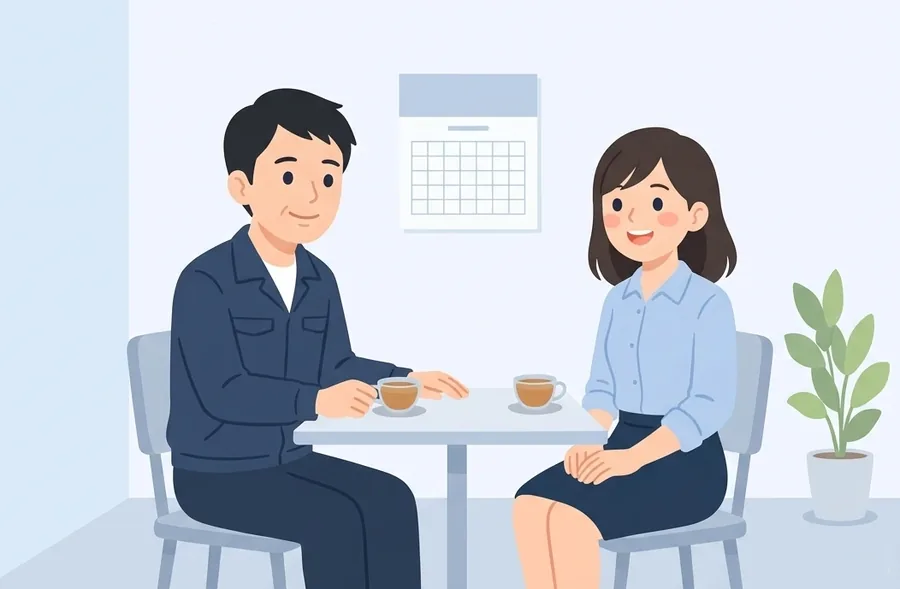
Lunch break in the break room. Tanaka asks Linh what she does on her days off.
 Tanaka
リンさん、やすみの ひは なにを しますか。
Linh, what do you do on your days off?
 Linh
にちようびは ともだちと かいものに いきます。
On Sundays I go shopping with a friend.
Linh
たなかさんは?
What about you, Tanaka?
Tanaka
わたしは りょうりが すきです。
I like cooking.
Tanaka
にちようびは かぞくと りょうりを します。
On Sundays I cook with my family.
Linh
そうですか。いいですね。
I see. That sounds nice.
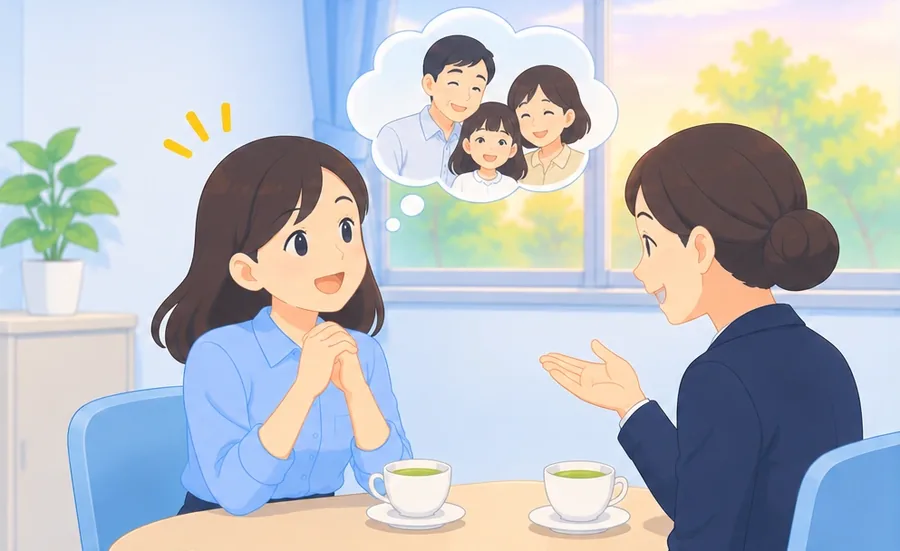
In the break room after work. Sato asks Linh about her family.
 Sato
リンさん、かぞくは ベトナムに いますか。
Linh, is your family in Vietnam?
Linh
はい。ちちと ははは ベトナムに います。
Yes. My father and mother are in Vietnam.
Sato
そうですか。おかあさんは げんきですか。
I see. Is your mother well?
Linh
はい、げんきです。ありがとうございます。
Yes, she's well. Thank you for asking.
Linh
にちようびは かぞくに でんわを します。
On Sundays I call my family.
Sato
わたしも まいしゅう ははに でんわを します。
I call my mother every week, too.
Lesson 11 Days off and family
Check what each line of the conversation means.
Lunch break in the break room. Tanaka asks Linh what she does on her days off.
Tanaka
リンさん、やすみの ひは なにを しますか。
Linh, what do you do on your days off?
Linh
にちようびは ともだちと かいものに いきます。
On Sundays I go shopping with a friend.
Linh
たなかさんは?
What about you, Tanaka?
Tanaka
わたしは りょうりが すきです。
I like cooking.
Tanaka
にちようびは かぞくと りょうりを します。
On Sundays I cook with my family.
Linh
そうですか。いいですね。
I see. That sounds nice.
In the break room after work. Sato asks Linh about her family.
Sato
リンさん、かぞくは ベトナムに いますか。
Linh, is your family in Vietnam?
Linh
はい。ちちと ははは ベトナムに います。
Yes. My father and mother are in Vietnam.
Sato
そうですか。おかあさんは げんきですか。
I see. Is your mother well?
Linh
はい、げんきです。ありがとうございます。
Yes, she's well. Thank you for asking.
Linh
にちようびは かぞくに でんわを します。
On Sundays I call my family.
Sato
わたしも まいしゅう ははに でんわを します。
I call my mother every week, too.
Lesson 11 Days off and family
These are the key phrases from the conversation. Say them out loud and copy them.
Some lines don't have audio yet (coming soon)
やすみの ひは なにを しますか。
What do you do on your days off?
Ask how someone spends their days off. Talking about things besides work brings you closer to the people you work with.
[にちようび]は [かいもの]に いきます。
On [Sundays] I go [shopping].
Say what you do on your days off. Add 「ともだちと」 or 「かぞくと」 to say who you are with.
しゅみは [りょうり]です。
My hobby is [cooking].
Say something you like. You can also say 「[おんがく]が すきです」. Even a short answer makes it easy for the other person to keep talking.
[たなかさん]は?
What about [Tanaka]?
After you answer, ask the other person the same thing. Asking back, not only answering, keeps the conversation going.
かぞくは [ベトナム]に います。
My family is in [Vietnam].
Say where your family is. When you share this, people may ask after you and look out for you.
「〜に いきます」 says what you go to do (かいものに いきます). For 「せんたく」, 「そうじ」, 「りょうり」 and 「でんわ」, say 「〜を します」 (せんたくを します). The 「と」 in 「ともだちと」 means “together with” (the 「と」 in 「カレーと ラーメン」 in Lesson 6 was the “and” that lists things). After you are asked, asking back 「たなかさんは?」 keeps the conversation going. 「に います」 in 「かぞくは ベトナムに います」 says where a person is, the same as in Lesson 8. When you talk about your own parents, say 「ちち」 (father) and 「はは」 (mother); for someone else's parents, say 「おとうさん」 and 「おかあさん」 (Sato's 「おかあさんは げんきですか」 is about Linh's mother). 「も」 in 「わたしも」 means “too”. 「しゅみ」 is something you like and often do. Like a time, a day of the week takes 「に」 (にちようびに). But for something you do every week, say 「にちようびは」 (にちようびは かぞくに でんわを します). 「にちようびに」 sounds like one particular day, such as this coming Sunday. The 「に」 in 「かぞくに でんわを します」 marks the person you call.
しゅみ
hobby
かぞく
family
ともだち
friend
おかあさん
(someone else's) mother
おとうさん
(someone else's) father
ちち
(my) father
はは
(my) mother
かいもの
shopping
せんたく
laundry
そうじ
cleaning
りょうり
cooking / dish
さんぽ
walk / stroll
おんがく
music
えいが
movie
スポーツ
sports
ゲーム
video game
げんき
well / healthy
いいですね
sounds nice
でんわを します
make a phone call
まいしゅう
every week
Lesson 11 Days off and family
Practice 1 of 10
You've answered every question. Now let's try the ones you missed once more.
Listen and choose the same sentence.
Correct!
Not quite
Answerやすみの ひは なにを しますか。
「なにを しますか」 asks what someone does.
Listen and choose the same sentence.
Audio coming soon
The audio is coming soon, so you can skip this question.
Correct!
Not quite
Answerせんたく
「せんたく」 means washing clothes.
You go shopping together with a friend. Which word goes in ( )?
ともだち( ) かいものに いきます。
Correct!
Not quite
Answerと
To say “together with”, use 「と」. 「ともだちと」 means together with a friend.
You say where your family is. Which word goes in ( )?
かぞくは ベトナム( ) います。
Correct!
Not quite
Answerに
Say where a person is with 「に います」 (Lesson 8).
On Sundays you do laundry and cleaning. What do you answer?
Tanaka
やすみの ひは なにを しますか。
Correct!
Not quite
Answerにちようびは せんたくと そうじを します。
Answer 「なにを しますか」 with 「〜を します」.
You like music. What do you answer?
Tanaka
リンさんの しゅみは なんですか。
Correct!
Not quite
Answerおんがくが すきです。
Answer 「しゅみは なんですか」 with something you like. 「おんがくが すきです」 is enough.
You have finished talking about your days off. Now you want to ask Tanaka the same thing. What do you say?
Tanaka
そうですか。いいですね。
Correct!
Not quite
Answerたなかさんは?
After you answer, asking back with 「〜さんは?」 keeps the conversation going.
Your mother in Vietnam is well. What do you answer?
Sato
おかあさんは げんきですか。
Correct!
Not quite
Answerはい、げんきです。ありがとうございます。
When someone asks after your family, answer and thank them. The question is 「げんきですか」, so say whether she is well, not where she is.
Tap the parts in the correct order to make a sentence.
Parts line up in the order you tap. Tap a placed part to take it back.
Correct!
Not quite
Answerにちようびは ともだちと かいものに いきます。
「にちようびは かいものに ともだちと いきます」 still gets your meaning across. But the usual order is 「にちようびは ともだちと かいものに いきます」. Words that say what you go to do, like 「かいものに」, usually come right before 「いきます」.
This is Linh's note. When does she call her family?
Correct!
Not quite
Answerにちようび よる 8じ
It says 「にちようび よる 8じ」. 「よる」 means night.
All correct!
Practice complete. Great work!
Lesson 11 Days off and family
In this situation, try saying it out loud.
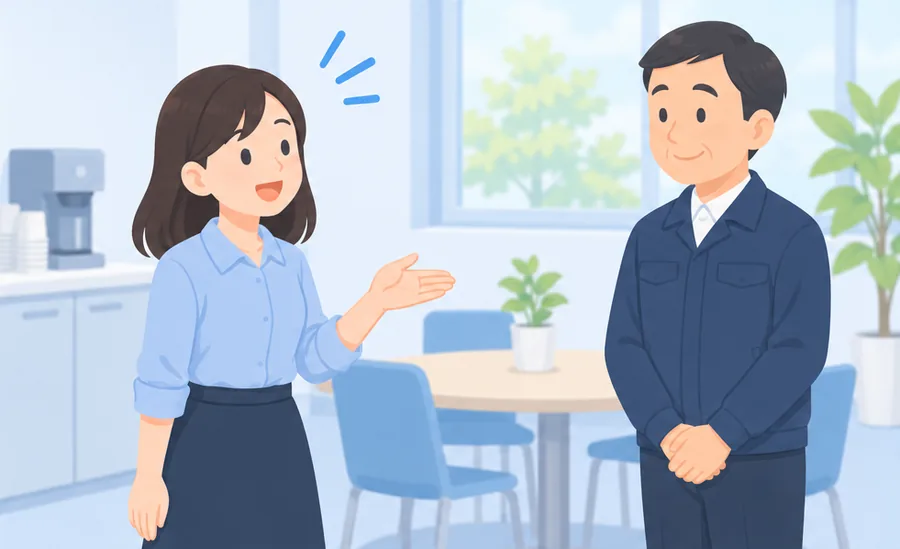
Tanaka asks 「やすみの ひは なにを しますか」. On Sundays you do laundry and cleaning, and in the evening you call your family. Answer, then ask Tanaka too. Say it out loud.
Answer 「にちようびは せんたくと そうじを します」. Then say 「よるは かぞくに でんわを します」, and finally ask back 「たなかさんは?」.
Example
にちようびは せんたくと そうじを します。よるは かぞくに でんわを します。たなかさんは?
You can say what you do on your days off, like 「にちようびは かいものに いきます」, and ask back 「たなかさんは?」 to keep the conversation going.
You can talk about what you like and about your family, like 「しゅみは りょうりです」 and 「かぞくは ベトナムに います」.

You finished Lesson 11
Day streak
You can say what you do on your days off, like 「にちようびは かいものに いきます」, and ask back 「たなかさんは?」 to keep the conversation going.
I can do it
Not yet
You can talk about what you like and about your family, like 「しゅみは りょうりです」 and 「かぞくは ベトナムに います」.
I can do it
Not yet