Listen and choose the same sentence.
Audio coming soon
The audio is coming soon, so you can skip this question.
Correct!
Not quite
Answerすみません、エーティーエムは どこですか。
The speaker is asking where the 「エーティーエム」 (ATM) is, not the 「トイレ」 or the 「ぎんこう」.
 Day One Japanese
Step 1 of 7
Your progress can't be saved on this device. You can keep learning while this page is open.
Lesson 14
まちで
Asking where the ATM or toilet is, asking how late a place is open, and telling someone by phone where you are when you're lost.
Lesson 14 Out in town
First, listen to the conversation. Listen as many times as you like.
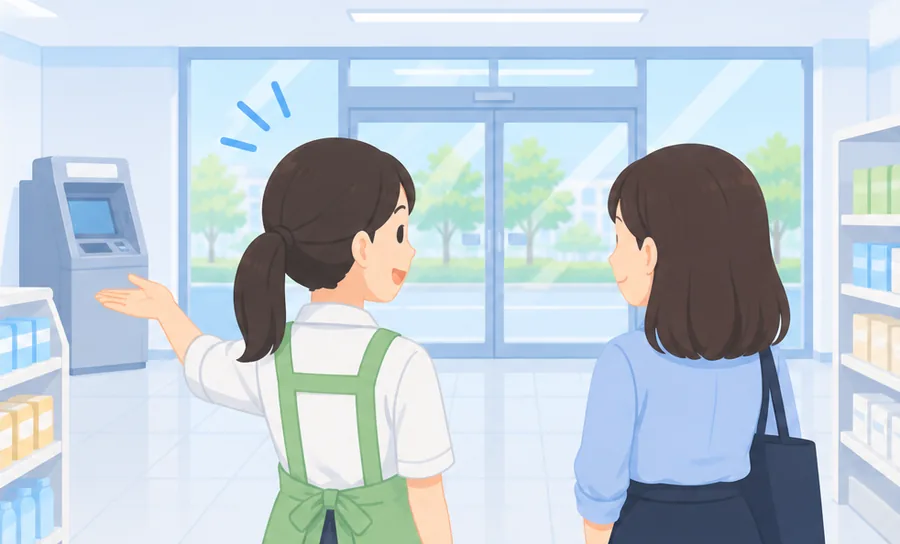
A day off. Linh steps into a supermarket. Facing the door, she asks the staff where the ATM and the toilet are.
 Linh
すみません。エーティーエムは どこですか。
Excuse me. Where is the ATM?
 Staff
あそこです。ドアの ひだりです。
Over there. It's to the left of the door.
Linh
ドアの ひだりですね。ありがとうございます。
To the left of the door, is that right? Thank you.
Linh
エーティーエムは なんじまでですか。
Until what time can I use the ATM?
Staff
ごご 9じまでです。
Until 9 p.m.
Linh
わかりました。それから、トイレは ありますか。
I see. Also, is there a toilet?
Staff
はい、あります。うしろです。
Yes, there is. It's behind you.
Linh
ありがとうございます。
Thank you.
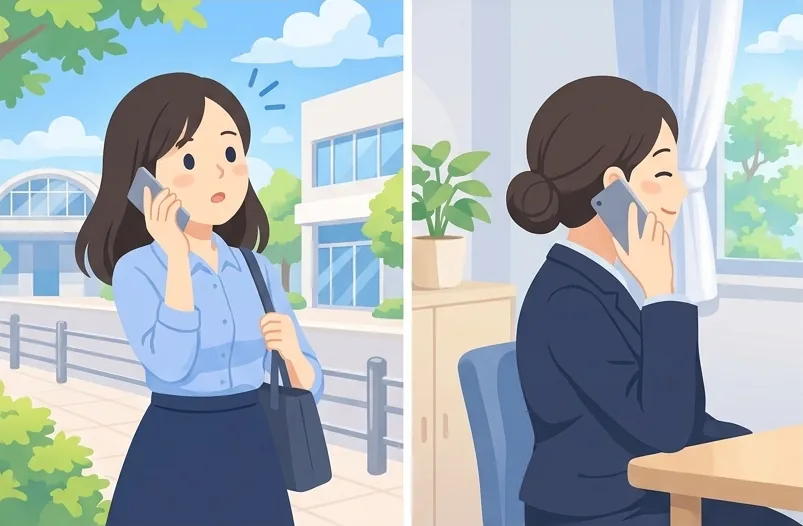
Sunday. Linh has lost her way in town. She calls Sato and tells her where she is.
Linh
もしもし、さとうさん。リンです。すみません、みちが わかりません。
Hello, Sato. This is Linh. I'm sorry, I don't know the way.
 Sato
だいじょうぶです。いま どこに いますか。
That's all right. Where are you now?
Linh
えきの まえに います。ぎんこうの となりです。
I'm in front of the station, next to the bank.
Sato
ぎんこうの となりですね。わかりました。
Next to the bank, right? Got it.
Sato
10ぷん まって ください。すぐ いきます。
Please wait 10 minutes. I'll come right away.
Linh
はい、ここで まちます。ありがとうございます。
Okay, I'll wait here. Thank you.
Sato
じゃあ、あとで。
See you in a bit.
Lesson 14 Out in town
Check what each line of the conversation means.
A day off. Linh steps into a supermarket. Facing the door, she asks the staff where the ATM and the toilet are.
Linh
すみません。エーティーエムは どこですか。
Excuse me. Where is the ATM?
Staff
あそこです。ドアの ひだりです。
Over there. It's to the left of the door.
Linh
ドアの ひだりですね。ありがとうございます。
To the left of the door, is that right? Thank you.
Linh
エーティーエムは なんじまでですか。
Until what time can I use the ATM?
Staff
ごご 9じまでです。
Until 9 p.m.
Linh
わかりました。それから、トイレは ありますか。
I see. Also, is there a toilet?
Staff
はい、あります。うしろです。
Yes, there is. It's behind you.
Linh
ありがとうございます。
Thank you.
Sunday. Linh has lost her way in town. She calls Sato and tells her where she is.
Linh
もしもし、さとうさん。リンです。すみません、みちが わかりません。
Hello, Sato. This is Linh. I'm sorry, I don't know the way.
Sato
だいじょうぶです。いま どこに いますか。
That's all right. Where are you now?
Linh
えきの まえに います。ぎんこうの となりです。
I'm in front of the station, next to the bank.
Sato
ぎんこうの となりですね。わかりました。
Next to the bank, right? Got it.
Sato
10ぷん まって ください。すぐ いきます。
Please wait 10 minutes. I'll come right away.
Linh
はい、ここで まちます。ありがとうございます。
Okay, I'll wait here. Thank you.
Sato
じゃあ、あとで。
See you in a bit.
Lesson 14 Out in town
These are the key phrases from the conversation. Say them out loud and copy them.
Audio coming soon
すみません、[エーティーエム]は どこですか。
Excuse me, where is the [ATM]?
Use this to ask where something is. Call out 「すみません」 first. You can ask a shop clerk or someone nearby. 「トイレは どこですか」 has the same form (Lesson 8).
[ドア]の [ひだり]です。
It's to the [left] of the [door].
Understand how people tell you where something is. Learn 「みぎ」, 「ひだり」 and 「まっすぐ」. 「みぎ」 and 「ひだり」 are from the speaker's point of view.
[エーティーエム]は なんじまでですか。
Until what time can I use the [ATM]?
Use this to ask until when you can use something or how late a shop is open. The answer will be like 「ごご 9じまでです」 or 「9じから 5じまでです」.
すみません、みちが わかりません。いま [えき]の まえに います。
I'm sorry, I don't know the way. I'm in front of the [station] now.
Use this when you are lost. It is better to say so right away than to keep walking around. On the phone, start with 「もしもし」. If you tell them where you are and a landmark nearby (like 「ぎんこうの となり」), they can find you more easily.
[ドア]の [ひだり]ですね。ありがとうございます。
To the [left] of the [door]. Thank you.
Use this to say back what you were told, to check it. Saying 「〜ですね」 lets you notice a mishearing right away. Finish with a thank-you.
To ask where something is, use 「〜は どこですか」 (Lesson 8). The answer uses 「みぎ」, 「ひだり」, 「まっすぐ」 or 「うしろ」 (Lesson 8) (ドアの ひだりです. うしろです). 「みぎ」 and 「ひだり」 are from the speaker's point of view. When you are told, say it back to check: 「ひだりですね」. Ask until when a shop is open with 「なんじまでですか」. The answer uses 「から」 and 「まで」, like 「ごご 9じまでです」 or 「9じから 5じまでです」 (Lessons 3 and 9). On a notice you may see 「9じ〜5じ」 with 「〜」, which means 「から」 and 「まで」. When you don't know the way, it's fine to say 「みちが わかりません」. On the phone, start with 「もしもし」 and say where you are: 「いま えきの まえに います」 (「います」 from Lesson 8). In 「ここで まちます」, 「で」 shows the place where you do something (wait here). Adding a nearby landmark (ぎんこうの となり) makes it easier to understand.
エーティーエム
ATM
ぎんこう
bank
ゆうびんきょく
post office
こうえん
park
みち
road / the way
みぎ
right
ひだり
left
まっすぐ
straight ahead
もしもし
hello (on the phone)
いま
now
すぐ
right away
あきます
open
しまります
close
えいぎょうじかん
business hours
にじゅうよじかん
24 hours
なんじまでですか
until what time?
きょうは やすみです
closed today
ちかく
nearby
めじるし
landmark
ちず
map
Lesson 14 Out in town
Practice 1 of 10
You've answered every question. Now let's try the ones you missed once more.
Listen and choose the same sentence.
Audio coming soon
The audio is coming soon, so you can skip this question.
Correct!
Not quite
Answerすみません、エーティーエムは どこですか。
The speaker is asking where the 「エーティーエム」 (ATM) is, not the 「トイレ」 or the 「ぎんこう」.
Listen to what the clerk says. Where is the ATM?
Correct!
Not quite
Answerドアの ひだり
The audio says 「あそこです。ドアの ひだりです。」 「ひだり」 is left and 「みぎ」 is right.
You ask a clerk where the toilet is. Which word goes in ( )?
すみません、トイレは( )ですか。
Correct!
Not quite
Answerどこ
Use 「どこ」 to ask where. 「いつ」 asks about a day and 「なんじ」 asks about a time.
You want to ask what time the bank closes. Which word goes in ( )?
ぎんこうは なんじ( )ですか。
Correct!
Not quite
Answerまで
To ask the end time, use 「なんじまでですか」. 「から」 is for the start time.
The clerk tells you where the ATM is. What do you answer?
Staff
あそこです。ドアの ひだりです。
Correct!
Not quite
Answerドアの ひだりですね。ありがとうございます。
Say back what you were told, then thank them. 「みぎ」 is not what the clerk said.
You are lost in town. You call Sato. What do you say?
Sato
もしもし、さとうです。
Correct!
Not quite
Answerもしもし、リンです。すみません、みちが わかりません。
On the phone, say 「もしもし」 and your name, then explain the problem: 「みちが わかりません」.
You are in front of the station. What do you answer?
Sato
いま どこに いますか。
Correct!
Not quite
Answerえきの まえに います。
Say where you are with 「〜に います」. 「あります」 is for things (Lesson 8).
Sato is coming to meet you. What do you answer?
Sato
10ぷん まって ください。すぐ いきます。
Correct!
Not quite
Answerはい、ここで まちます。ありがとうございます。
When someone says 「まって ください」, answer 「はい、ここで まちます」 and thank them.
Tap the parts in the correct order to make a sentence.
Parts line up in the order you tap. Tap a placed part to take it back.
Correct!
Not quite
Answerもしもし、 いま えきの まえに います。
It's 「もしもし、いま えきの まえに います」. On the phone, start with 「もしもし」.
This is a notice from the bank. What does it say about Saturday?
Correct!
Not quite
Answerやすみです
It says 「どようび・にちようびは やすみです」. The bank opens at 9 from Monday to Friday.
All correct!
Practice complete. Great work!
Lesson 14 Out in town
In this situation, try saying it out loud.
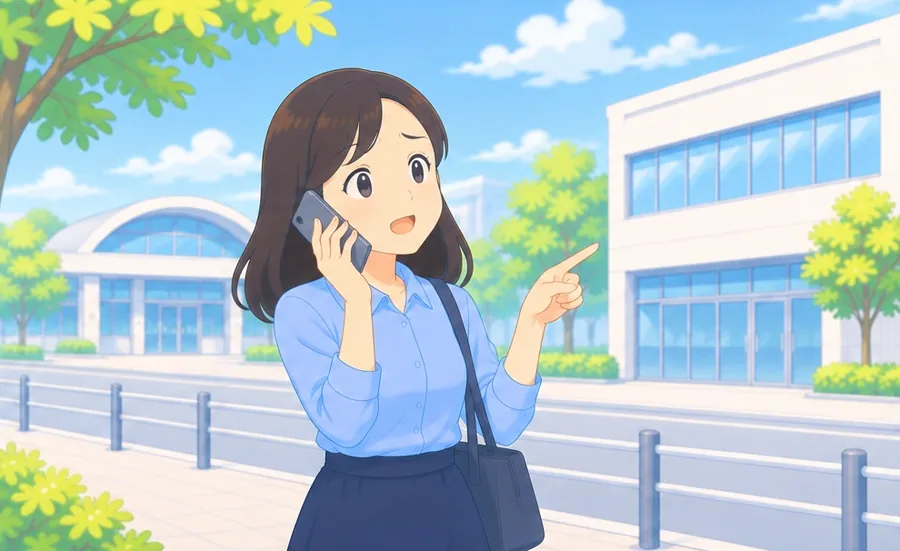
You have lost your way in town. You call Sato. After saying 「もしもし」, tell her you don't know the way and where you are (in front of the station, next to a bank). Say it out loud.
First say 「もしもし、さとうさん。リンです」. Then say 「すみません、みちが わかりません」. Finish with where you are and a landmark: 「いま えきの まえに います。ぎんこうの となりです」.
Example
もしもし、さとうさん。リンです。すみません、みちが わかりません。いま えきの まえに います。ぎんこうの となりです。
You can ask 「すみません、エーティーエムは どこですか」, and when told 「ドアの ひだりです」 or 「うしろです」, repeat 「ひだりですね」 to check. You can also ask how late a place is open with 「なんじまでですか」.
When you are lost, you can tell someone by phone where you are: 「もしもし。すみません、みちが わかりません。いま えきの まえに います」.

You finished Lesson 14
Day streak
You can ask 「すみません、エーティーエムは どこですか」, and when told 「ドアの ひだりです」 or 「うしろです」, repeat 「ひだりですね」 to check. You can also ask how late a place is open with 「なんじまでですか」.
I can do it
Not yet
When you are lost, you can tell someone by phone where you are: 「もしもし。すみません、みちが わかりません。いま えきの まえに います」.
I can do it
Not yet